


Should you Add Electric Commercial Vehicles (EVs) to your Fleet?
Adding electric vehicles to your fleet is an excellent way to cut maintenance and operational costs, as well as modernising your array of vehicles.
Electric vehicles are widely regarded as the future of driving, but before making the switch to electric, it’s important to understand the different types of EVs, the cost and maintenance benefits, as well as any government incentives associated with switching to an EV fleet.
The rise of EV fleets in the UK
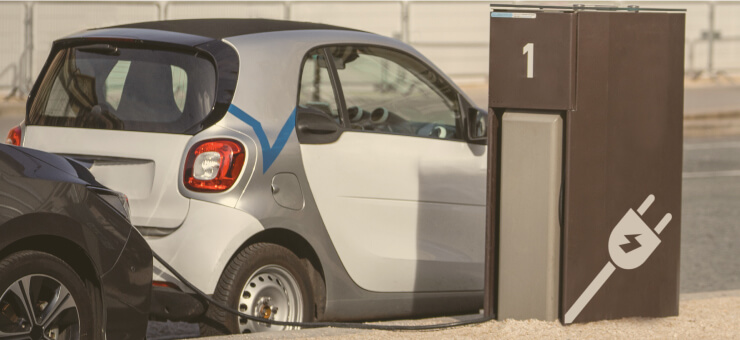
Electric vehicles are on the rise across the board in the UK, particularly for fleets. This is driven by their excellent efficiency, cheaper operating costs, and a growing sense of responsibility for the environment and controlling emissions.
Types of electric vehicles in a fleet
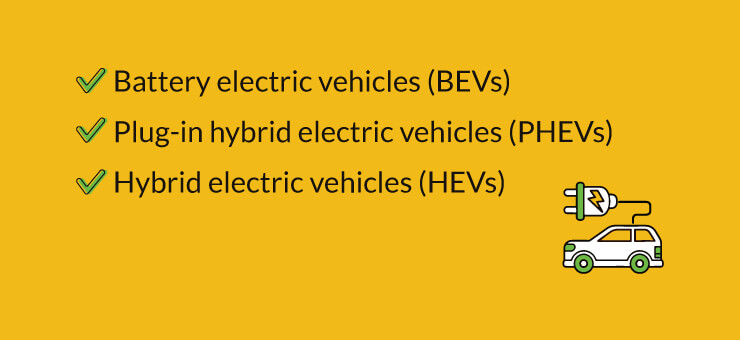
These are the following types of electric vehicles you may upgrade to in your fleet:
Get Bespoke EV Fleet Insurance
As the UK’s leading fleet insurance specialists, we work with the UK’s largest insurance providers for fleets to get you an instant, hassle-free policy.
What challenges might electric commercial vehicles bring to a fleet?
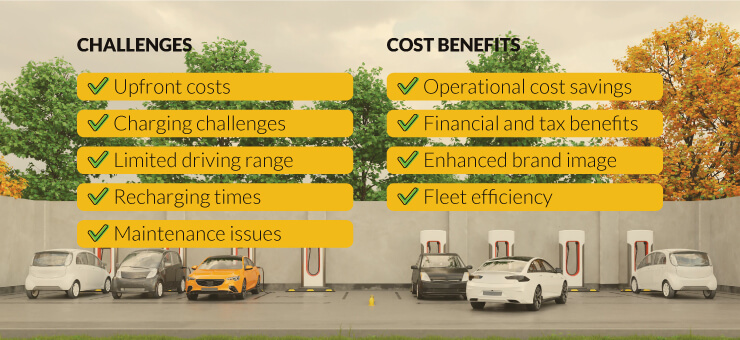
Whilst electric commercial vehicles are beneficial to most fleets, there are some challenges to consider:
First notice of loss is crucial for the effective management of claims, saving time, money and stress for your business.
The earlier a claim is reported, the higher the chance of accurate evidence being collected including dashcam footage, photos, witness statements and more. It also makes exaggerated or inaccurate third-party claims less likely.
Cost benefits of electric vehicles for fleets
The following are the primary cost benefits of electric vehicles for fleets:
Cost benefits are amplified with a well managed EV fleet.
Are there government incentives available for EV fleets?
UK government incentives for EV fleets include grants for vehicles such as vans and taxi fleets, as well as grants for infrastructure, such as charging points.
There are grants designed to support fleet owners installing charging facilities at depots, including 75% cost coverage for charge points and civil costs.
UK businesses can also claim 50% of the VAT on lease costs for EVs, or 100% if the vehicle is used strictly for business purposes.
What to consider as a business when switching to electric vehicles
When switching to electric vehicles, you should first consider the operational needs of your organisation. Assess typical mileage, payload needs and where your vehicles are used, determining whether EVs are suitable for you.
Then, which type of EV suits your needs? Consider the difference between BEVs, PHEVs and HEVs, and decide which type is best suited.
Next, you need to plan for charging infrastructure (unless using HEVs). Decide whether you need workplace chargers, or if you will use public charging.
Calculating total cost of ownership including understanding both the initial purchasing price, as well as long-term operating costs. Work out whether you will be saving money, and how long it may take you to recoup your upfront investment. Research further into government schemes and grants to discover funding options.
Should you lease or buy electric vehicles as a business?
The decision between leasing or buying an electric vehicle as a business depends on your long term goals, financial capabilities and fleet usage.
Leasing is generally a better option for your business if you prioritise lower initial costs, more predictable payments over time, and consistent access to the latest technology. Lease vehicles are also tax deductible, lowering corporation tax bills. However, these EVs never become an asset, and often include mileage limits.
Buying EVs as a business is typically preferable if you’re looking to increase your assets as a business, and you’ve got the upfront capital required to facilitate these long term savings. You can also take advantage of 100% first year capital allowance on new EV purchases.
Should your business switch to an EV fleet?
Yes, your business would benefit from switching to an EV fleet in most cases. They offer benefits such as lower maintenance costs, lower running costs, tax benefits and decrease your carbon footprint (increasing brand image).
To get started with EV fleet insurance to protect your new fleet, contact FleetCover today.
Secure Your EV Fleet Insurance Today
As the UK’s leading fleet insurance specialists, we work with the UK’s largest insurance providers for fleets to get you an instant, hassle-free policy.
Chat to Us
Rather get a policy created over the phone? Speak with our experts now:
Get a Quote
Get a quick quote from an insurance professional with our easy form and a few details: