


Transitioning to an EV Fleet: Step by Step
A step-by-step guide to transitioning to an electric fleet. Ensure your daily business operations and ROI are protected with FleetCover today.
Moving from a traditional business fleet over to an electric one is a strategic switch many business-owners are currently making. With benefits such as cost-savings, sustainability and operational improvements, the transition seems to be a no-brainer.
However, before electrifying your fleet, you should consider the challenges and potential setbacks which may arise. Approach your fleet electrification using a step by step plan with the help of FleetCover.
Reviewing your current fleet for electrification
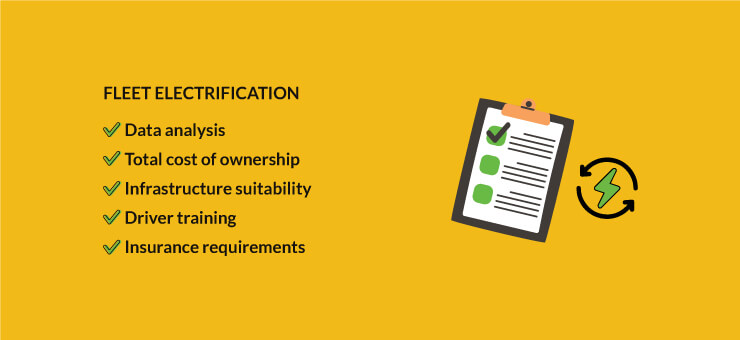
Before fleet electrification, you need to review your current fleet to consider aspects such as mileage, efficiency, up/downtime and overall cost of operation, as well as how switching to electric may benefit you in the long term.
Conducting an audit of your fleet involves:
- For more information and support transitioning to an EV fleet, feel free to contact FleetCover.
Fleet Electrification Support
Considering EV charger installation/charging infrastructure

One of the most noticeable changes associated with moving from traditional to electric vehicles is the transition to electric charging.
As a business owner, you may need to consider the installation of EV charger infrastructure, allowing your drivers to conveniently charge their vehicles without disrupting business operations.
You’ll need to consider a number of factors before you do this, the first of which is charger location. Do you have a specific location where all your fleet vehicles are parked at the end of every day, or do your drivers each keep their vehicles in different locations? You need to consider centralised charging points, easily accessible by your drivers often enough to charge during downtime, ideally during off-peak times.
If you have one centralised location for all drivers, conduct an electrical capacity assessment to ensure your current supply can handle the load required for multiple charging points.
On top of this, calculate costs associated with such infrastructure, and how this ties into your growth plan as you add more and more EVs to your fleet.
Planning EV fleet maintenance
Another aspect of fleet electrification is running regular maintenance on your new electric vehicles.
Generally, EV fleet maintenance focuses on aspects such as:
- Battery health management
- Preventative maintenance
- Tire maintenance
- Charging infrastructure repairs
- Driver training
Each of the above elements should be planned and accounted for in advance of any actual vehicular changes. This is the best way to avoid unexpected and costly issues.
Route optimisation and range limitations
Route optimisation refers to the process of determining the most cost-effective and efficient path for your fleet. This isn’t necessarily the shortest route in terms of distance, as you need to factor in aspects such as traffic and delivery windows.
When dealing with long-haul journeys, it’s important to consider the range limitations of electric engines, which typically need more regular top-ups than standard combustion engines.
This means you may need to plan routes which integrate charging points along the way, as well as considering the impact of weather conditions and terrain on range also.
EV fleet training: Maintaining compliance

EV fleet compliance and safety involves understanding the unique risk factors which come with EVs, and providing comprehensive training to help your drivers understand and account for these risks. It also involves understanding EV insurance requirements and ensuring your policy is up-to-date.
To maintain compliance, you need to implement training which familiarises your drivers with specific features and differences associated with EVs. These include:
Failure to provide adequate training may lead to vehicle damage and/or personal injury which you could end up being liable for.
EV Fleet Insurance Quotes and Support
As the UK’s leading fleet insurance specialists, we work with the UK’s largest insurance providers for fleets to get you an instant, hassle-free policy.
Implementing fleet electrification changes
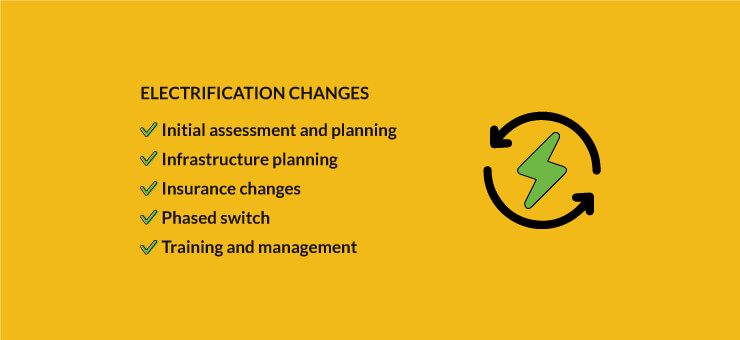
Depending on the size of your fleet, implementing fleet electrification often requires a phased, data-backed approach. Here are our key steps to a gradual switch to electric vehicles:
- 1Initial assessment and planning - Audit your current fleet to identify which vehicles you plan to switch first. Usual targets are those with predictable and shorter routes, which you can use to test the first phase. At this stage, you should also research government or local incentives to make the switch.
- 2Infrastructure planning - Assess the electrical capacity of your current premises and determine if upgrades to your infrastructure needs an overhaul to facilitate charging stations.
- 3Insurance changes - Research EV-specific insurance requirements or speak to fleet insurance experts to find out what changes you might need to make to your fleet policy.
- 4Phased switch - Begin with a ‘pilot program’, switching roughly 10% of your fleet to test the process and pinpoint snags or issues.
- 5Training and management - As you roll out your first phase of electric vehicles, provide comprehensive training to familiarise your drivers with features such a regenerative braking and instant torque. Monitor performance on the new vehicles (charging, range, energy use) and refine your strategies and route optimisation to maximise ROI.
Note: For smaller fleets of two or three vehicles, a single cost-benefit analysis and update to your insurance policies may suffice before you overhaul all of the vehicles together.
For any queries or insurance requirements as you transition to an electric fleet, contact FleetCover.
Chat to Us
Rather get a policy created over the phone? Speak with our experts now:
Get a Quote
Get a quick quote from an insurance professional with our easy form and a few details: